
How do you actually know when you are ready to go back to your sport? For most people, the honest answer is they don’t.
They go off a calendar, a cleared appointment, and a knee that feels okay. Then they hope.
We replaced the guessing with a number. Your Comeback Score is an objective measure of whether your body can truly handle your sport again, built from real force data, not a feeling. It’s the difference between hoping you’re ready and knowing you are.
Same-day or next-day appointments available. No referral needed.
The Comeback Score is your return-to-sport readiness number.
We measure how your body produces force, absorbs force, and moves under load using force plate technology.
Then, we turn that data into a clear, objective score that shows whether you’re ready to return, and where you still have work to do.
Think of it as the difference between a doctor saying you look fine and a test that actually shows what’s going on. One is an opinion.
The other is data. When it comes to going back to the thing you love, on a body that has been injured, you want the data.
Force plates are precision platforms that measure exactly how much force your body produces and absorbs as you move. You stand, jump, land, and push off on them, and they capture things the eye simply cannot see. How hard each leg pushes. How much force each knee absorbs on landing. Whether your injured side is quietly doing less work than your healthy side.
This is the same technology used by professional sports teams, collegiate athletic programs, and Olympic training centers to make return-to-sport and performance decisions. It used to be reserved for elite athletes with million-dollar budgets. We brought it to the Tri-Valley so you can have the same objective answers about your own body.
Here’s the problem with most return-to-sport decisions.
A knee can feel fine in daily life and still be nowhere near ready for sport.
You can walk, jog, and even lift without pain while your injured leg is producing 30% less force than your healthy leg. You would never feel that gap in everyday movement. But your sport will find it the moment you cut, sprint, or land at full speed.
That hidden gap is one of the biggest reasons reinjuries happen, especially after an ACL tear. Athletes get cleared on time and feel, return to sport with a deficit they couldn’t feel, and get hurt again.
The Comeback Score finds that gap before your sport does.
It measures the difference between your sides, your power, and your ability to absorb force, and it tells you the truth. Either your body is ready, or here’s exactly what still needs work. No guessing. No hoping. Just the number.
The Comeback Score serves a few different athletes.
If you are coming back from an ACL tear or surgery, this is the final gate before returning to sport. It’s the proof that your knee can handle what your sport will ask of it, and it’s built into every Comeback Kid recovery.
If you finished physical therapy somewhere else but still don’t feel like yourself, the Comeback Score shows you exactly what’s still missing. Many people come to us after being discharged, feeling like something is off but unable to name it.
The data names it.
If you are a coach, parent, or athlete who wants objective return-to-sport clearance, this gives you a real standard instead of a guess. No more sending a kid back because the season is starting and the knee seems okay.
If you’re a healthy athlete who wants to know where you stand, the Comeback Score gives you a clear performance baseline.
It shows a snapshot of your strength, power, and symmetry so you can train against it and retest over time.
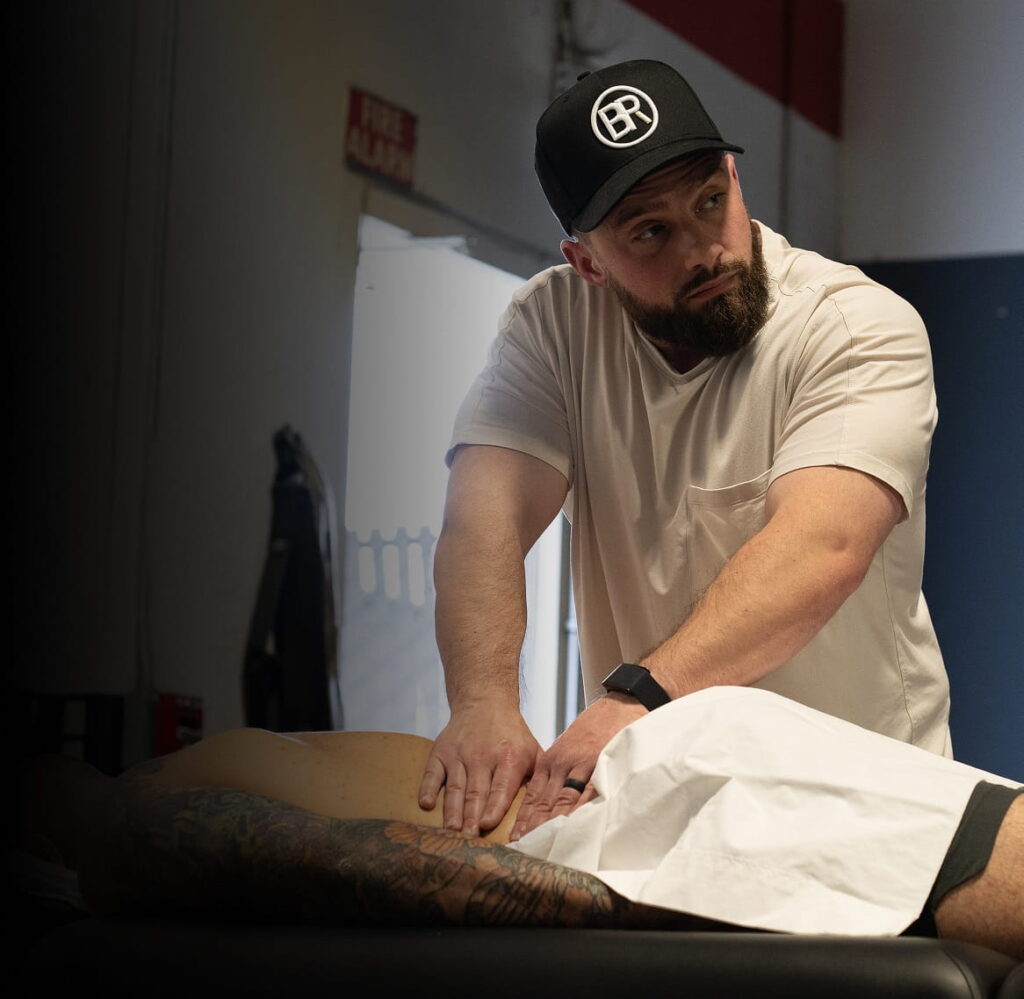
You come in and work one-on-one with your doctor. We take you through a series of movements on the force plates, things like jumps, landings, and single-leg tests, each one chosen to measure a specific part of how your body handles load.
The plates capture the data. Your doctor reads it with you in plain language, not clinical jargon. Here’s how your injured side compares to your healthy side. Here’s your power. Here’s how well you absorb force when you land. Here’s your Comeback Score, and here’s exactly what it means for you.
You leave with your number, a clear understanding of what it says about your readiness, and a plan for closing any gap that’s still there. You are never handed a score and sent off to figure it out alone.
We provide Comeback Score assessments for athletes and active adults across the Tri-Valley, including Pleasanton, Dublin, Livermore, San Ramon, and Danville.
A lot of clinics have equipment. What matters is what you do with it.
The Comeback Score is not a gadget we use to look impressive. It’s built into how every clinician here makes return-to-sport decisions.
The same testing, the same standards, the same number, no matter who you work with. That consistency is the whole point.
Your readiness is measured against a real standard, not one person’s gut feeling on a given day.
That’s what makes the Comeback Score something you can actually trust with the decision that matters most.
Whether it’s safe to go back.
We are an out-of-network provider. You pay at the time of service and we submit a superbill, an itemized receipt, to your insurance carrier. Your insurance will reimburse you directly.
HSA and FSA funds are eligible for physical therapy services.
For full details and pricing on Comeback Score assessments, call us at (925) 397-0399 or contact us here.
The Comeback Score is an objective return-to-sport readiness number built from force plate testing. It measures how your body produces force, absorbs force, and compares side to side, then turns that data into a clear score you can use to make better return-to-sport decisions.
Force plates are precision platforms that measure how much force your body produces and absorbs when you move, jump, land, and push off. They capture things the eye can’t see, like whether one leg is doing less work, whether you absorb force evenly, and whether your injured side is ready for sport-level demand.
Because a knee can feel fine in daily life and still be missing the strength, power, or force absorption your sport requires. You may not feel that gap while walking or jogging, but your sport can expose it fast when you cut, sprint, land, or decelerate.
No. The Comeback Score is built into our ACL recovery process, but it can also help athletes coming back from other injuries.
It’s also useful if you finished PT somewhere else and still don’t feel right, or if you’re healthy and want a performance baseline you can train against.
Yes. Medical clearance and athletic readiness aren’t always the same thing. If you were cleared but still don’t trust your body, the Comeback Score shows what’s actually happening and what still needs work.
The assessment looks at how your body produces force, absorbs force, and handles side-to-side demand. Depending on your situation, testing may include jumps, landings, single-leg work, and other movements that show how ready your body is for sport.
Yes. The Comeback Score is especially helpful for youth athletes and parents who want objective proof before returning to sport. Testing is age-appropriate, and parents stay involved throughout the process.
No. You can book a Comeback Score assessment directly. Once you’re scheduled, we’ll handle the out-of-network benefits check for you.
We’re located in Pleasanton and provide Comeback Score assessments for athletes across the Tri-Valley, including Dublin, Livermore, San Ramon, and Danville.
Reach out and book a free discovery call to get started.
Stop wondering if your body can handle it. Get the number that tells you the truth, and the plan to close any gap that’s left.