But you already know the hard part is what comes next, because being cleared by your surgeon is not the same as being ready to sprint, land, and trust your knee in your sport again.
This is where your real comeback happens. Post-surgical ACL physical therapy that doesn’t stop at walking and jogging,
but takes you back to the athlete you were, with proof you are ready.
Here’s something most people don’t hear until it’s too late. The surgery isn’t what determines whether you come back.
The rehab is.
That’s both the warning and the good news. The part that decides your future is the part you still control. And it’s the part we do better than anyone.
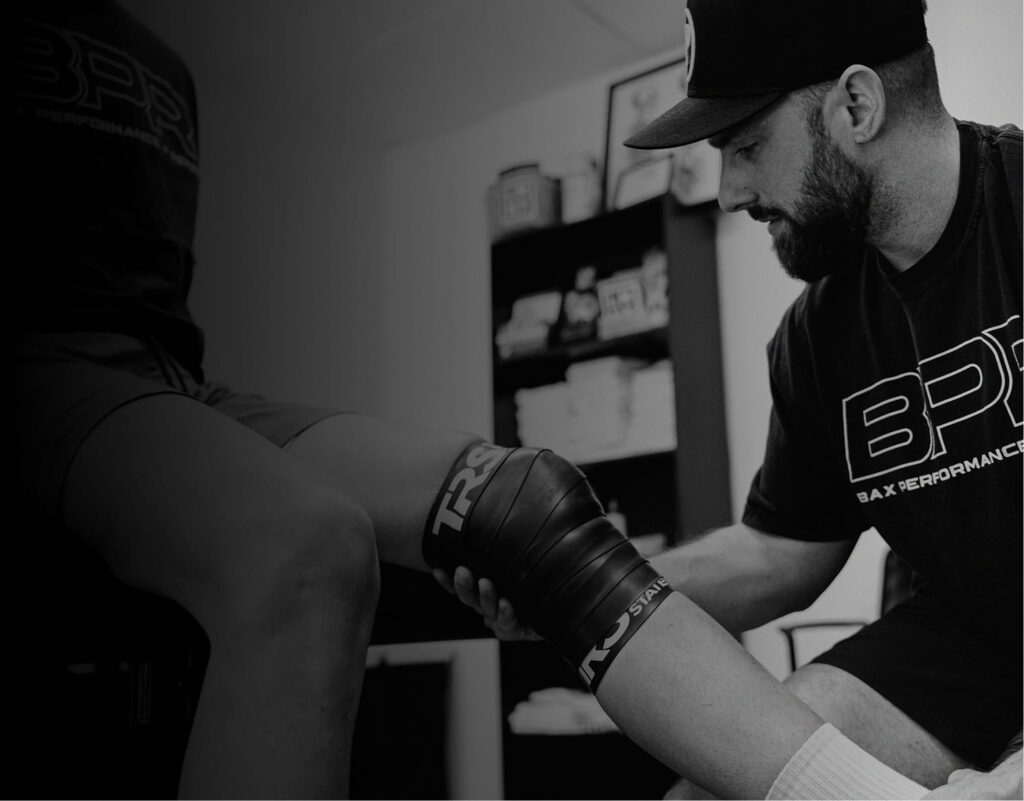
A lot of post-surgical ACL rehab stops too soon. Insurance-based physical therapy often ends at three to six months, right when you can walk normally, jog a little, and move through basic exercises without much pain. That feels like a finish line because it’s so much better than where you started.
But your sport asks far more from your knee than basic movement.
You need to decelerate hard, change direction, land under fatigue, absorb force, and produce power. You need to trust your knee when the game speeds up and the movement gets messy.
If your previous physical therapy ended and you still feel weak,
hesitant, guarded, or afraid of reinjuring it, your rehab wasn’t finished.
You just haven’t had the plan that takes you the rest of the way.
This is the gap Comeback Kid was built to close.
Every ACL recovery is different. Your timeline depends on your graft type, your surgery, your sport, your strength, your swelling, your confidence, and how your body responds. But your rehab should never feel random. Here’s the arc your physical therapy usually works toward.
Protect and Restore
(Weeks 1 to 6)
First, we calm the knee down. This phase focuses on swelling, range of motion, walking mechanics, quad activation, and protecting your healing graft.
This isn’t passive. We are activating the right muscles
and building the foundation from day one, because what happens early shapes everything that follows.
Rebuild the Foundation
(Weeks 6 to 16)
Once your knee can handle more, we build real strength and control. You train your quad, hamstrings, hips, calves, trunk, balance, and single-leg stability with intent. You will feel noticeably better in this phase. That’s good, but better isn’t ready. This is exactly where standard physical therapy tends to stop. For us, it’s where the important work begins.
Return to Training
(Months 4 to 7)
Now your rehab starts to look like training.
Heavier loading, single-leg strength, jumping, landing, deceleration, and sport-specific movement. Where it makes sense for your knee, we use blood flow restriction training, which lets us build strength safely while protecting the joint. This phase proves your knee can handle more.
Not in theory, but in the gym, under load, with control.
Return to Sport
(Months 7 to 12 and Beyond)
A date on the calendar shouldn’t decide when you go back. Your knee should. This is where your Comeback Score comes in. We test strength, power, symmetry, jumping, landing, cutting, and deceleration, and we hold your return to a real, measurable standard. We’re never trying to rush you back. We’re getting you back ready.
This is what makes post-surgical ACL physical therapy at BPR different. For years, the decision to return to sport after ACL surgery came down to -a timeline and a feeling. Enough months had passed, the knee felt okay, so the athlete got cleared. That’s how so many people return before their body is ready. It’s also a major reason second ACL injuries happen.
We do it differently. Using force plate technology, the same kind used by professional and collegiate sports programs, we measure exactly how your reconstructed knee produces and absorbs force, how it compares to your healthy side, and whether it can truly handle your sport.
That data becomes your Comeback Score, a clear, objective number that tells you when you are genuinely ready to return. Not when the calendar says so.
When your knee says so. Your Comeback Score is the difference between hoping your knee will hold up in your first game back and knowing it will.
Coming back from ACL surgery takes more than a sheet of exercises. It takes a team that understands graft protection, progressive loading, return-to-sport demands, and the mental side of learning to trust your knee again.
At BPR, you work one-on-one with your doctor every session. They know your surgery, your graft, your sport, and your story, and they adjust your plan based on what your knee is showing them.
No aides. No rotating through providers who have never seen your file.
Every clinician here runs the same program, follows the same return-to-sport standards, and measures your readiness with the same force plate data and the same Comeback Score.
That’s what makes Comeback Kid a program you can trust no matter who you work with.
Whether you are a high school athlete chasing your next season or an adult who just wants to get back to the field, the court, or the trail, this is built for you.
We work with athletes and active adults across the Tri-Valley, including Pleasanton, Dublin, Livermore, San Ramon, and Danville.
We are an out-of-network provider. You pay at the time of service and we submit a superbill, an itemized receipt, to your insurance carrier.
If you have out-of-network benefits and have met your deductible, your insurance will reimburse you directly. In some cases you may be surprised by how much you get back. HSA and FSA funds are eligible.
What you get up front is different from the standard insurance model. Focused one-on-one time, a plan built around your sport and your goal, and post-surgical ACL rehab that follows your progress and your Comeback Score instead of a generic timeline. For ACL recovery, that difference is everything. This is not the injury where you want to coast, guess, or stop at good enough.
For full insurance and pricing details, call us at (925) 397-0399 or contact us here.
As soon as your surgeon clears you, which is often within days of surgery. Early ACL rehab usually focuses on swelling, range of motion, walking mechanics, quad activation, and protecting the healing graft.
Early post-op PT usually focuses on protecting the graft and restoring basic function. This phase focuses on rebuilding strength, power, control, confidence, and sport-specific readiness, then measuring that progress with your Comeback Score.
The Comeback Score is your objective return-to-sport number. It uses force plate testing to measure how your reconstructed knee produces and absorbs force, how it compares to your other side, and whether it can handle the demands of your sport.
It depends on your graft, your sport, your strength, your swelling, your confidence, and where you are in recovery. Most ACL return-to-sport timelines run nine to twelve months or longer, but we don’t base your return on the calendar alone. We base it on readiness.
Yes, we see this often. An old ACL reconstruction with incomplete rehab can leave strength deficits, movement compensations, recurring pain, or a knee you still don’t trust. We take a fresh look, measure where you are, and build from there.
Listen to that feeling. Medical clearance and athletic confidence aren’t always the same thing. If your knee still feels weak, guarded, slow, or unreliable, we can test what’s missing and help you rebuild what your sport requires.
Yes. We help youth athletes rebuild strength, control, confidence, and return-to-sport readiness after ACL surgery. The goal is to protect the knee and make the next step based on proof, not pressure.
No referral needed. Once your surgeon clears you to begin rehab, you can book directly with us. Once you’re scheduled, we’ll handle the out-of-network benefits check for you.
We’re located in Pleasanton and work with athletes and active adults across the Tri-Valley, including Dublin, Livermore, San Ramon, and Danville.
If you’re recovering from ACL surgery and want more than basic PT, reach out and book a free discovery call.