
You need more than rest and a list of exercises. You need someone who finds what’s driving the problem and builds the plan to fix it.
No referral needed. We can usually get you in this week.
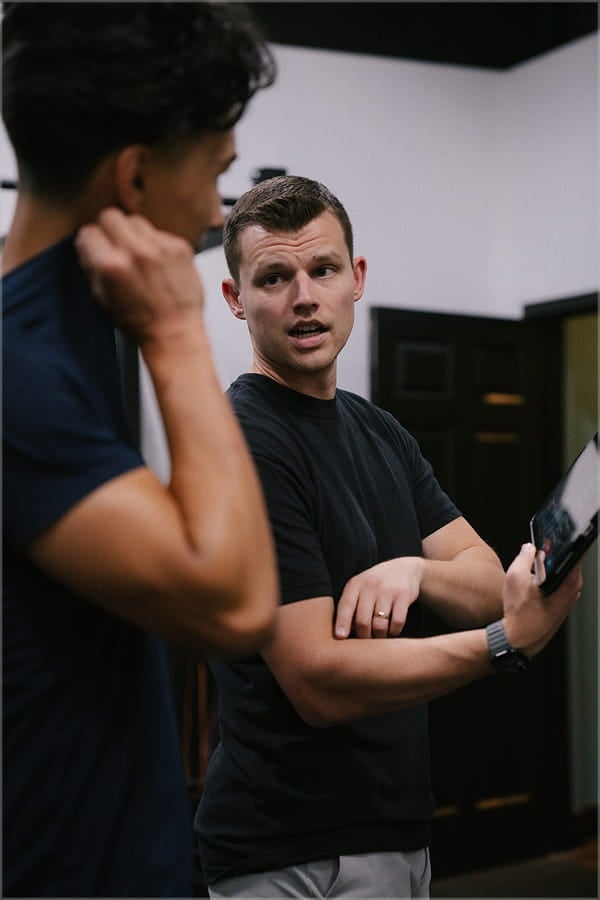
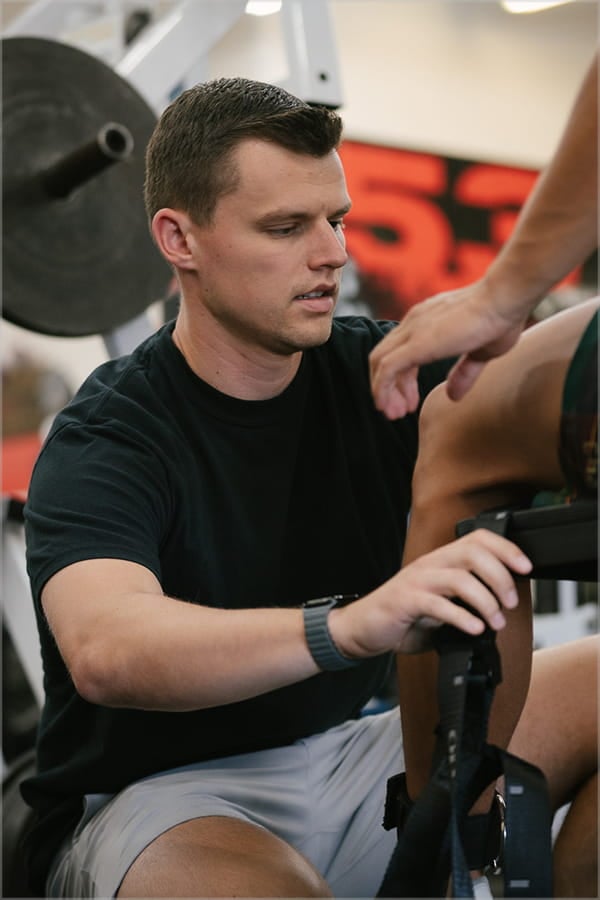
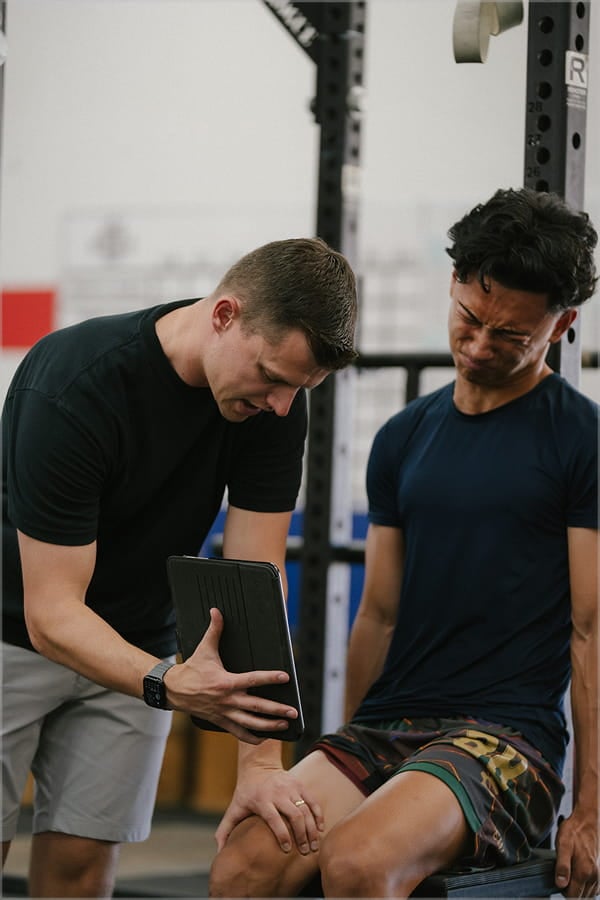
Sports injury rehab is physical therapy built specifically for people who train, compete, and move at a high level. It goes beyond basic pain relief and focuses on returning you to full performance, not just getting you through the day without discomfort.
We look at how you move, what your body can handle, where you compensate, and what your sport or training actually demands. Then building the plan around all of it.
The standard approach asks whether it hurts less. Performance-based rehab asks whether you can do what you were doing before and trust your body while you do it.
This page is for you if something keeps interrupting your training and you’re tired of working around it.
Maybe you saw another provider and felt like the real problem was never fully addressed.
Maybe you have a race, a season, or a competition on the calendar and need a real timeline.
Not a vague guess.
A real plan.
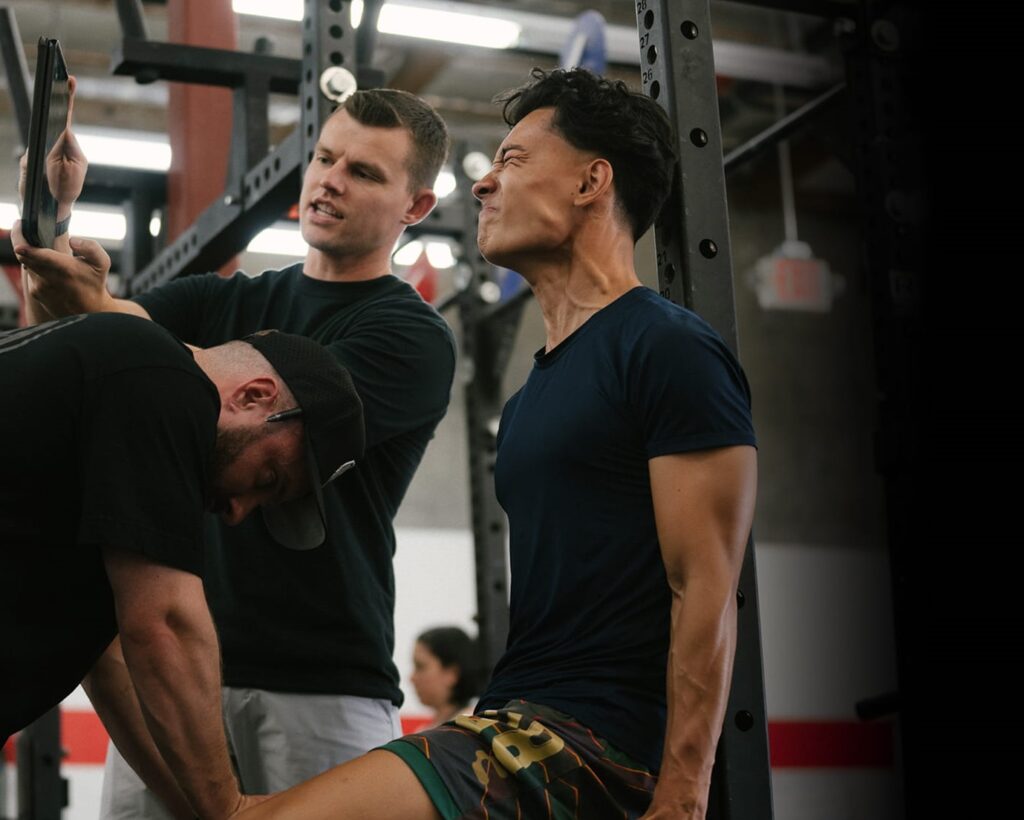
Pain is usually the loudest part of the problem. It’s rarely the whole problem.
If your knee hurts, we still need to look at your hip, foot, strength, control, and how you load your body under fatigue. If your shoulder keeps flaring up, we need to look at your trunk, shoulder blade, pressing mechanics, pulling volume, and training load.
That’s why rest only works until you start doing the thing again.
Research on sports injuries supports this bigger-picture approach.
Injuries aren’t always fixed by treating the painful spot alone.
Movement patterns, training load, strength gaps, recovery, and confidence all matter.
Your body works as a system. If the system keeps breaking down, we need to find out why. That’s what we do here.
According to the CDC, approximately 8.6 million sports and recreational injuries occur in the United States every year.
Knee injuries account for roughly 20% of all sports injuries. Hamstring injuries make up 12 to 16%. Ankle sprains account for 10 to 15%. Shoulder injuries, including rotator cuff problems, represent about 8%.
The number that matters most is this one. The rate of injury recurrence within the same season is approximately 20%.
One in five athletes who get injured gets injured again before the season ends. Most of the time, that’s not bad luck.
It’s incomplete rehab that stopped at pain relief and never addressed what caused the injury in the first place.
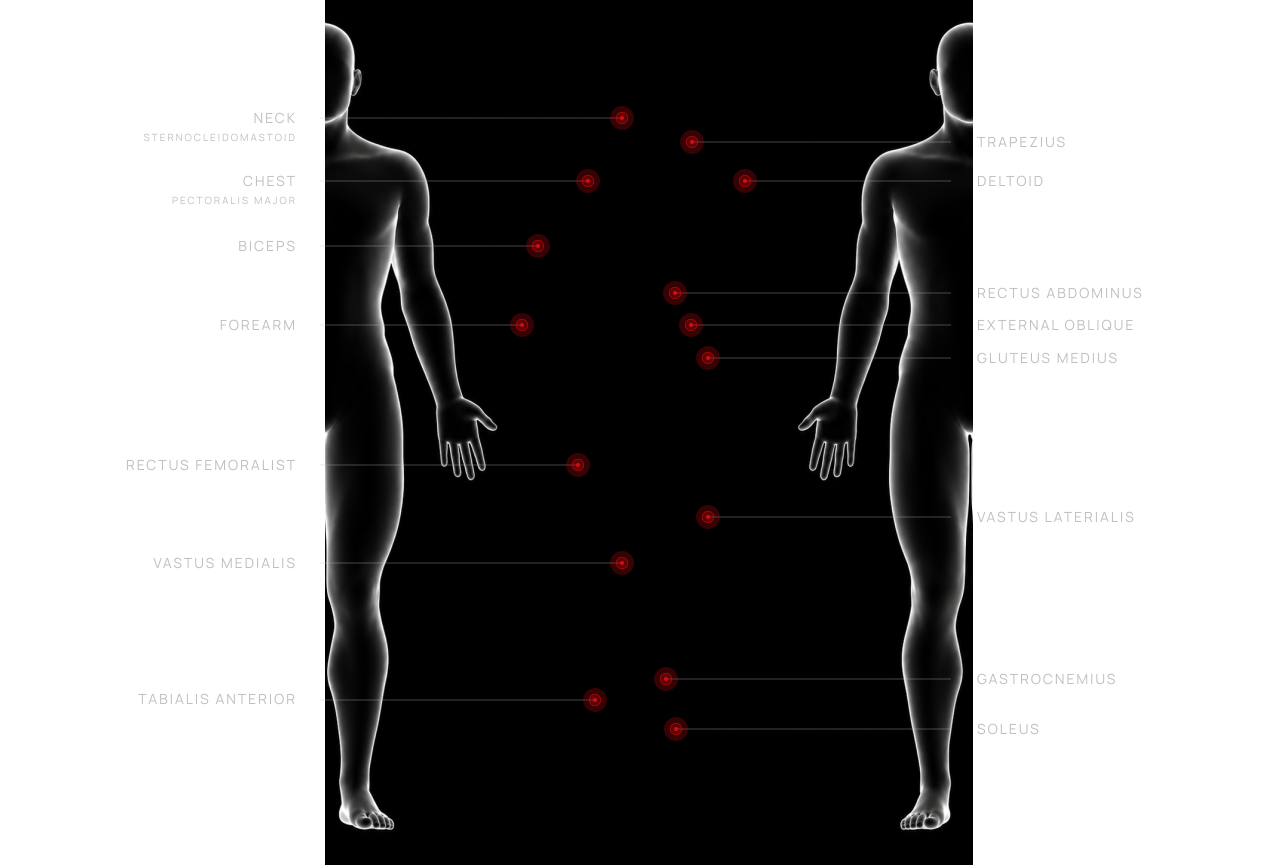
You don’t need to know exactly what’s wrong before you reach out.
Find where it hurts and we’ll help you figure out the rest.
Your first visit gives you answers.
Your doctor starts with the full picture.
We look at what hurts, how you move, what you can load, and where your body compensates.
Then we connect that to your sport, training, work, and goals.
By the end of that first session, you’ll know what’s driving the problem. You’ll understand what needs to change.
And you’ll have a plan you can start using right away.
That plan won’t be a vague list of exercises or random advice you’re supposed to figure out on your own. It’ll be specific to your body, your injury, and what you’re trying to get back to.
From there, every session is 60 to 90 minutes, one-on-one with your doctor. You won’t get passed around or stuck repeating your story to someone new.
Your plan may include hands-on manual therapy, strength work, loading progressions, movement coaching, sport-specific drills, and training modifications.
We may also use blood flow restriction training when it fits your injury and stage of rehab. BFR uses a specialized cuff during low-load exercise, which can help you build strength when heavier resistance isn’t the right move yet.
That can be especially useful early in rehab, when the injured area needs strength but isn’t ready for heavy loading.
As your body changes, the work changes with it.
That’s the point.
One of the most common questions we get is whether you have to stop training completely.
The answer is no.
The goal is to keep you moving while we modify what needs to change.
Research supports the use of reduced training or cross-training during rehabilitation to help athletes avoid the metabolic and physiological setbacks that come with complete rest. Strategic modification beats stopping altogether in most cases.
We build the plan around what you’re training for and what your body can actually handle right now. Those two things aren’t always the same. Our job is closing that gap.
Physical therapy has success rates between 68 and 72% for most people. Among those who completed a full course of PT for sports injuries, 73% reported that it resolved their injuries in the long term, according to research published in Orthopedic Reviews.
The practices that produce those outcomes share a few things. They look beyond the painful site. They address strength, movement mechanics, and sport-specific demands. And they don’t stop when the pain goes away.
The gap between good outcomes and average outcomes is rarely the injury itself. It’s the quality and specificity of the rehab.
Sports physical therapy is physical therapy with a performance focus. Both involve evaluation, hands-on care, and exercise. The difference is in the goal. Standard PT typically aims to reduce pain and restore basic function. Sports PT aims to return you to your sport, training, or activity at or above your prior level. That means understanding load management, training demands, sport-specific movement, and what your body needs to handle under fatigue, not just in daily life.
Not always. In many cases we modify your training rather than eliminate it. The goal is to keep you moving while we address what is driving the problem. The specific modifications depend on your injury, your training load, and what your body can tolerate. We figure that out together in your first visit.
It depends on the injury, how long it has been present, and what you’re returning to. Acute injuries with a clear cause often resolve faster than long-standing issues that have been worked around for months. Most people start feeling meaningfully better within three to six sessions. Full return to sport or performance training varies by injury and individual. We give you a realistic timeline at your first visit, not a generic estimate.
Many people come to us after insurance-based PT that felt generic or incomplete. We take a fresh look at what’s going on, find what was missed, and build from where you are now. You aren’t broken. The right plan just has not been built yet.
Your first session is 60 to 90 minutes with a doctor of physical therapy. We talk through your injury history, assess how you move, identify what’s driving the problem, and start mapping out your plan. You leave with clarity on what’s going on and a real next step, not a follow-up appointment just to get a diagnosis.
Yes. We work with strength athletes regularly and understand what squatting, deadlifting, pressing, pulling, and Olympic lifting actually demand from the body. We won’t tell you to stop lifting. Instead, we’ll help you modify intelligently, rebuild what broke down, and get back to training with confidence.
No, you don’t need a referral to start with us. Once you book, we’ll handle the out-of-network benefits check for you.
Yes. We work with youth athletes across a range of sports and injuries. All care for minors is age-appropriate and involves parent communication throughout. For ACL injuries in youth athletes specifically, see our dedicated ACL Rehab pages.
We are an out-of-network provider. You pay at the time of service and we submit a superbill, which is an itemized receipt, to your insurance carrier. If you have out-of-network benefits and have met your deductible, your insurance may reimburse you directly. In some cases you may be surprised by how much you get back. HSA and FSA funds are generally eligible.
Questions about your plan? We are happy to help before you book.
For full insurance and pricing details, call us at (925) 397-0399 or contact us here.
Book your sports injury evaluation and leave with a real plan.